Foundation engineering in Hobart is far more than simply placing concrete in the ground—it is the critical discipline that ensures any structure, from a residential home to a multi-storey commercial development, remains stable, durable, and safe throughout its design life. The category of Foundations encompasses the assessment of ground conditions, the selection of appropriate foundation types, and the detailed design required to transfer structural loads to the underlying earth without excessive settlement or bearing failure. In Hobart, where the legacy of historical construction meets modern urban expansion, a thorough understanding of foundation behaviour is essential. Whether you are dealing with a sloping site in Battery Point, a waterfront redevelopment in Salamanca, or a new subdivision in Kingston, the performance of your building begins beneath the surface. Engaging a specialist to conduct a bearing capacity analysis early in the project can prevent costly failures and ensure compliance with Australian Standards.
Hobart’s geological setting presents a unique set of challenges that demand local expertise. The city is underlain by a complex mosaic of Jurassic dolerite, Permian mudstone, and Triassic sandstone, often overlain by variable Quaternary sediments. These formations are frequently encountered on the steep, weathered slopes that characterise much of the Hobart region, where the risk of differential settlement and shallow landslide is heightened. In the flatter alluvial plains near the Derwent River, soft estuarine clays and loose silts can exhibit poor bearing capacity and a propensity for long-term consolidation settlement. Additionally, certain areas contain fill materials from historical land reclamation, which are notoriously heterogeneous. For sites where the natural soil profile is problematic, solutions such as pile foundation design become necessary to bypass weak strata and transfer loads to competent rock or dense gravels at depth.
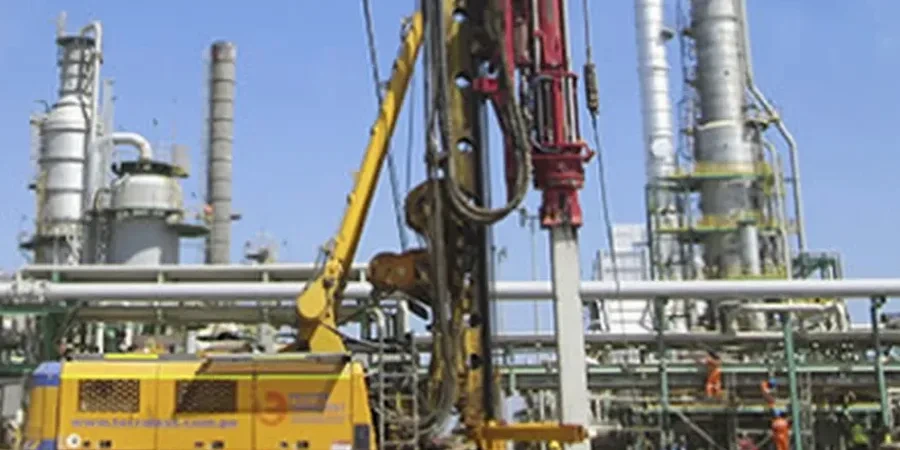
All foundation design and construction in Hobart must adhere to the National Construction Code (NCC) and the relevant Australian Standards, most notably AS 2870 for residential slabs and footings, and AS 2159 for piling design and installation. AS 2870 classifies sites based on soil reactivity and provides prescriptive designs for common ground conditions, but sites with deep fills, highly reactive clays, or slopes greater than 1:10 often fall outside its scope and require engineered performance-based solutions. AS 2159 mandates rigorous geotechnical investigation, load testing, and quality control for bored, driven, and continuous flight auger piles. In Tasmania, WorkSafe Tasmania also oversees the safety aspects of excavation and foundation construction, while local councils may impose additional requirements in areas prone to landslip or coastal erosion. A seismic foundation design approach, while not always the first consideration in Tasmania’s moderate seismicity zone, must still account for earthquake-induced liquefaction in susceptible saturated sands and silts as per AS 1170.4, ensuring life safety and serviceability.
The types of projects requiring comprehensive foundation services in Hobart are diverse and growing. The residential sector, driven by the state’s housing demand, often needs tailored solutions for challenging hillside blocks where a simple strip footing is insufficient; here, a raft/mat foundation design can distribute loads evenly over variable ground. Medium-density apartments and mixed-use developments in suburbs like Glenorchy and Moonah frequently require deep foundations, such as driven or bored piles, to support heavier structural loads on marginal soils. Infrastructure projects, including bridge abutments, retaining walls, and stormwater culverts, demand detailed bearing capacity and settlement analyses to ensure long-term performance. Heritage-sensitive projects in Hobart’s historic core often involve underpinning existing masonry foundations with micropiles, minimising vibration and disturbance to adjacent structures. Each of these scenarios hinges on a robust geotechnical model and a foundation strategy that is both practical and cost-conscious, without compromising safety.
Available services
Differential settlement analysis
→ Ver detalleBearing capacity analysis
→ Ver detalleSeismic foundation design
→ Ver detallePile foundation design
→ Ver detalleRaft/mat foundation design
→ Ver detalleMicropile design
→ Ver detalleDriven pile design
→ Ver detalleCollapsible soil evaluation
→ Ver detalleExpansive soil evaluation
→ Ver detallePile skin friction vs. end bearing analysis
→ Ver detalleCommon questions
What are the most common foundation types used in Hobart, and how are they selected?
Selection is based on the site’s geotechnical profile and structural loads. Common types include strip footings for stable, flat sites with good bearing capacity; raft slabs for moderately reactive soils or where differential settlement is a risk; and deep piles—driven, bored, or micropiles—to bypass soft clays, fills, or to reach dolerite bedrock on steep slopes. A bearing capacity analysis and settlement assessment per AS 2870 or AS 2159 guides the final choice.
How does Hobart's geology affect foundation design compared to other Australian cities?
Hobart’s geology is dominated by Jurassic dolerite and Permian mudstone, often on steep, weathered slopes, creating a high risk of differential settlement and landslide. Unlike the expansive basaltic clays of Melbourne or the sandy plains of Perth, Hobart’s challenges include shallow bedrock, colluvial deposits, and soft estuarine sediments near the Derwent. This demands specialised site investigations and often requires deep foundations or ground stabilisation techniques tailored to these unique conditions.
What is the difference between a bearing capacity failure and excessive settlement, and which is more critical in Hobart?
Bearing capacity failure is a sudden, catastrophic shear collapse of the soil under the foundation, while excessive settlement is a gradual, often uneven, downward movement that can crack and distort a structure over time. In Hobart, excessive differential settlement is typically the more critical concern due to the prevalence of variable fill, soft clays, and weathered rock profiles on sloping sites. Both must be checked against the serviceability limits in AS 2870.
When is a geotechnical investigation mandatory before foundation design in Tasmania?
A geotechnical investigation is mandatory for all structures outside the scope of AS 2870’s prescriptive designs—essentially any site with abnormal moisture conditions, deep fills, slopes, or where structural loads exceed standard residential assumptions. The NCC and Tasmanian building regulations require designs to be based on adequate data. Practically, this means any commercial, multi-residential, or complex hillside development must have a site-specific investigation to inform the foundation analysis and manage risk.