Seismic engineering in Hobart encompasses a comprehensive suite of analytical and design services aimed at mitigating earthquake risk for structures and infrastructure across southern Tasmania. While the region is often perceived as having low seismicity compared to active plate boundaries, historical events such as the 1884 Tasman Sea earthquake and more recent tremors underscore the importance of proactive seismic assessment. This category covers everything from site-specific ground response evaluations to advanced isolation strategies and regional hazard mapping, ensuring that both new developments and existing buildings can achieve appropriate levels of resilience. For engineers and asset owners, integrating seismic amplification analysis early in the design phase is critical to understanding how local soil conditions may magnify shaking and influence structural demands.
Hobart’s geological setting presents unique challenges for seismic design, with much of the city and its suburbs underlain by Jurassic dolerite bedrock, Tertiary basalts, and variable Quaternary sediments including alluvial deposits along the Derwent River corridor. These contrasting materials create sharp impedance contrasts that can significantly amplify ground motions at certain frequencies, particularly in areas with deep soft clay or reclaimed land. The foothills of Mount Wellington and the surrounding topography also introduce potential for basin-edge effects and topographic amplification, making site-specific seismic microzonation an essential tool for urban planning and risk assessment. Understanding these local geological controls is fundamental to developing realistic seismic hazard models that reflect actual sub-surface behaviour rather than generic code assumptions.
Australian seismic practice is governed by AS 1170.4-2007 (R2018) Structural design actions – Earthquake actions in Australia, which provides the overarching framework for hazard definition, site classification, and structural analysis. For Hobart, the standard assigns a hazard factor (Z) that reflects the moderate seismicity of the Tasmanian region, but practitioners must carefully apply the site sub-soil classification provisions, as the default Class B rock may be unconservative for softer soil profiles common in the CBD and along the Derwent estuary. The standard also references AS 3600 for concrete structures and AS 4100 for steel, with earthquake-resistant detailing requirements that become increasingly stringent for higher importance levels such as hospitals, emergency response facilities, and major bridges. Engineers operating in Hobart must navigate these requirements while also considering the National Construction Code’s performance-based pathways, which often demand rigorous justification when departing from deemed-to-satisfy solutions.
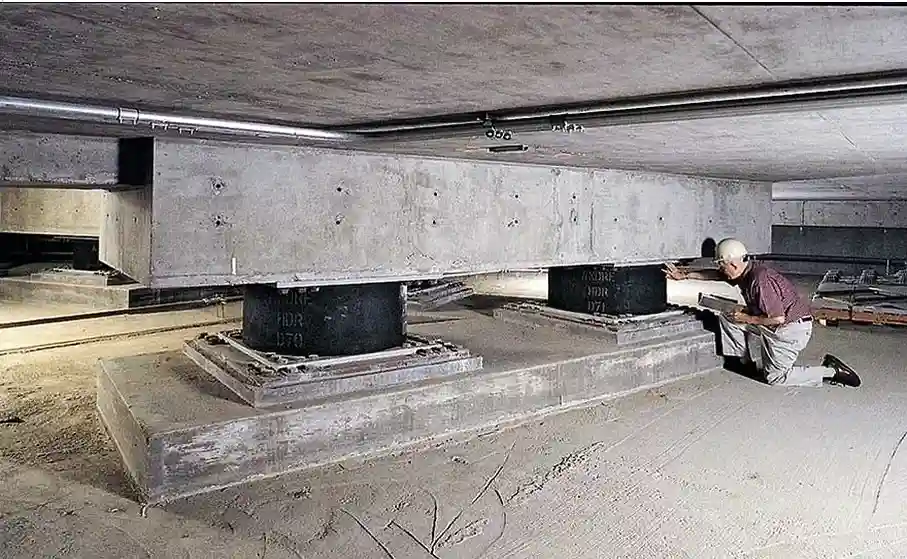
A wide range of project types in the Hobart area benefit from specialist seismic input, from low-rise residential developments on sloping sites to major infrastructure such as the Tasman Bridge, the Royal Hobart Hospital, and educational facilities at the University of Tasmania. Critical lifeline structures, including water reservoirs, power substations, and telecommunications hubs, require detailed seismic vulnerability assessments to ensure post-event functionality. Heritage buildings in Battery Point and Salamanca Place present additional complexity, where base isolation seismic design can offer a means of achieving life safety and asset protection objectives without compromising architectural character. Industrial facilities with heavy machinery or hazardous materials also demand careful consideration of seismic restraint and secondary structure interaction to prevent cascading failures during an event.
Common questions
How seismically active is Hobart compared to other Australian capital cities?
Hobart sits in a region of moderate seismicity relative to Australian standards, with a hazard factor lower than major east coast capitals like Sydney or Melbourne but comparable to other parts of southeastern Australia. The city has experienced historical earthquakes including events in the Tasman Sea that were felt strongly in the Hobart area, and intraplate seismicity within Tasmania itself, though large damaging events are infrequent. Local site conditions can significantly amplify ground motions, making site-specific assessment important despite the moderate regional hazard.
What is the difference between seismic microzonation and a standard site classification?
Seismic microzonation provides a spatially detailed map of expected ground motion amplification, liquefaction potential, and other seismic hazards across an area, accounting for local geological and geotechnical variability. A standard site classification under AS 1170.4 typically assigns a single class based on averaged sub-surface properties at a specific location. Microzonation is a broader planning tool that identifies how different neighbourhoods or suburbs in Hobart may respond differently to the same earthquake, informing land-use decisions and prioritisation of retrofitting programs.
When is base isolation recommended over conventional fixed-base seismic design in Hobart?
Base isolation becomes particularly attractive for high-importance structures, heritage buildings where conventional strengthening would be intrusive, or facilities housing sensitive equipment that must remain operational after an earthquake. In Hobart, isolation can decouple a structure from the amplified ground motions expected on softer soil sites, reducing inter-storey drifts and floor accelerations. It is also considered for new buildings where enhanced post-earthquake functionality is a client requirement, such as hospitals or data centres.
Does AS 1170.4 require seismic design for all buildings in Hobart?
Not all buildings trigger mandatory seismic design under AS 1170.4; the requirement depends on the building's importance level, structural system, and site sub-soil class. Low-importance, simple structures on rock sites may be exempt, but many common building types in Hobart, especially those on softer soils or with irregular configurations, will require some level of seismic assessment. The standard also includes provisions for domestic structures, though engineered design is typically required for multi-storey residential and all commercial or institutional projects.