Geotechnical laboratory testing forms the analytical backbone of any construction or infrastructure project in Hobart, providing essential data on the physical and mechanical behaviour of soils and rock. This category encompasses a comprehensive suite of tests designed to evaluate properties such as strength, compressibility, permeability, and compaction characteristics. From preliminary site investigations to construction quality control, laboratory analysis ensures that ground conditions are thoroughly understood, mitigating risks associated with slope instability, foundation settlement, or material failure. In a city like Hobart, where complex geology and variable soil profiles are common, reliance on precise laboratory data is not merely best practice but a fundamental engineering necessity.
Hobart's geological setting is dominated by Jurassic dolerite bedrock, often overlain by weathered residual soils, Tertiary sediments, and Quaternary alluvial or colluvial deposits. These materials can exhibit highly variable engineering behaviour, particularly the residual soils derived from dolerite weathering, which may retain parent rock fabric while losing significant strength. A detailed residual soil characterization is often critical, as these soils can transition abruptly from stiff clay to weak, sensitive material. Additionally, the region's temperate maritime climate, with its moderate to high rainfall, influences soil moisture content and groundwater conditions, directly impacting parameters obtained from tests like the triaxial test or consolidation analysis.
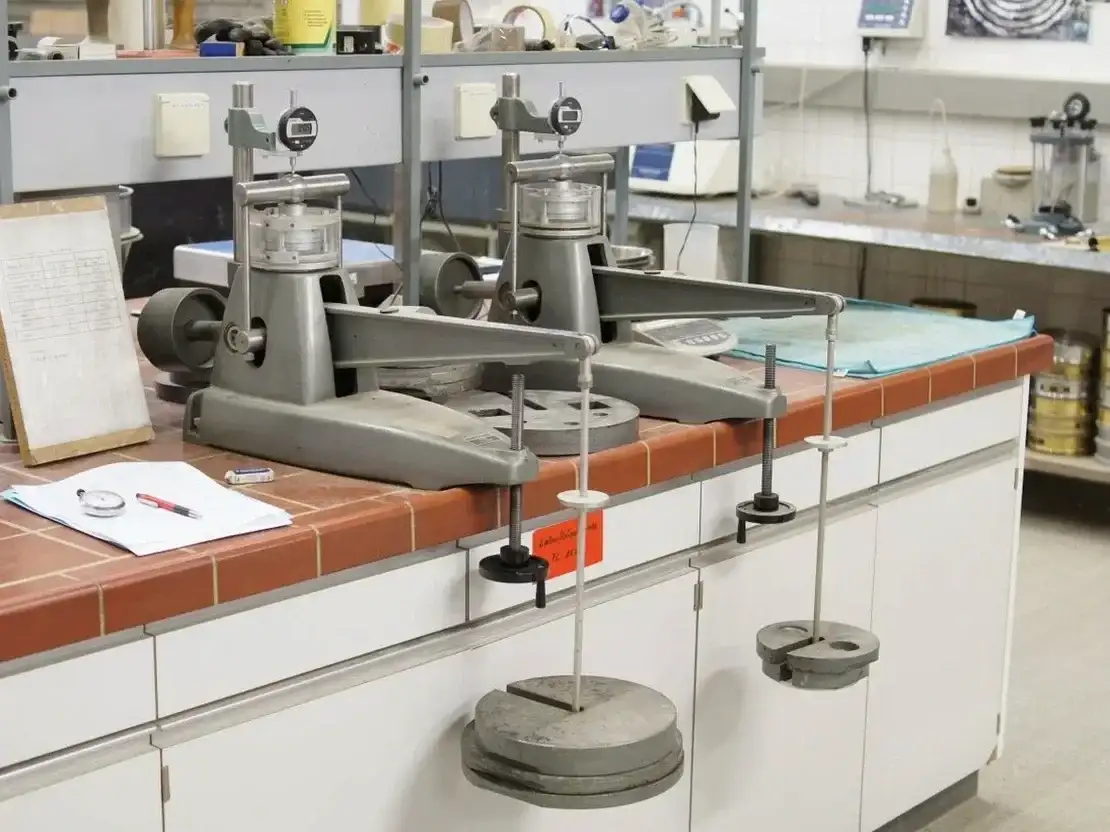
Laboratory testing in Australia must adhere to the rigorous standards set by Australian Standards, primarily the AS 1289 series for soil testing methods. These standards govern every aspect of a test, from sample preparation and equipment calibration to the specific procedural steps for determining properties like unconfined compressive strength or compaction characteristics. For instance, an unconfined compression test on a cohesive soil specimen follows strict guidelines on specimen dimensions and loading rate to ensure valid, reproducible results. Compliance with these national norms is mandatory for most projects and provides a legally defensible framework for geotechnical design, ensuring that the data generated in a Hobart laboratory is consistent and comparable with work performed anywhere in the country.
The types of projects in Hobart that demand comprehensive laboratory testing are diverse and critical to the region's development. Foundation design for residential and commercial buildings on the often-challenging hillside terrains requires oedometer consolidation test data to predict settlement. Road and infrastructure projects rely heavily on compaction tests to ensure fill materials meet specified density and moisture criteria, directly referencing standard or modified Proctor methods. Furthermore, assessing slope stability in areas prone to landslides, designing retaining structures, or evaluating the suitability of on-site wastewater disposal systems all hinge on accurate permeability and shear strength parameters derived from laboratory soil mechanics studies. Every major earthworks, tunnelling, or dam project in southern Tasmania begins with and is continuously validated by these essential laboratory services.
Available services
Residual soil characterization
→ Ver detalleUnconfined compression test (UCS)
→ Ver detalleOedometer consolidation test
→ Ver detalleProctor test (Standard or Modified)
→ Ver detalleTriaxial test
→ Ver detalleSoil mechanics study
→ Ver detalleLaboratory permeability test (falling/constant head)
→ Ver detalleCommon questions
What is the general purpose of a geotechnical laboratory testing program?
A laboratory testing program quantifies the physical, hydraulic, and mechanical properties of soil and rock samples to inform safe and economical design. It moves beyond field descriptions to provide measurable parameters like shear strength, compressibility, and permeability, which are used directly in analytical models for foundations, slopes, and earthworks, thereby reducing project uncertainty and risk.
How do I know which laboratory tests are required for my Hobart project?
The required tests are determined by a geotechnical engineer based on the project type, site geology, and the specific design questions needing answers. A preliminary desktop study and site investigation will identify critical issues like potential settlement or slope stability, which then dictate a testing schedule typically aligned with the relevant Australian Standards for the anticipated failure mechanisms.
What is the difference between a standard and a modified Proctor compaction test?
The main difference lies in the compactive effort applied. A modified Proctor test uses a heavier hammer and a greater drop height, delivering about 4.5 times more energy per unit volume of soil than a standard Proctor test. This simulates the effect of heavier modern compaction equipment and generally results in a higher maximum dry density at a lower optimum moisture content.
How are soil samples prepared and handled to ensure reliable laboratory results?
Sample integrity is paramount and begins in the field with proper sealing and transport to prevent moisture loss or disturbance. In the laboratory, 'undisturbed' samples, often from thin-walled tubes, are carefully extruded and trimmed for tests like triaxial or oedometer, while 'disturbed' samples are used for classification or compaction tests, all following strict chain-of-custody and AS 1289 preparation procedures.